Sep 11 2026
David Liebe Hart // MCASH // PISS SIPPER LVL 6 GOBLIN WIZARDStaff Pick12 days
Marigold Brattleboro


BrattBeat Event
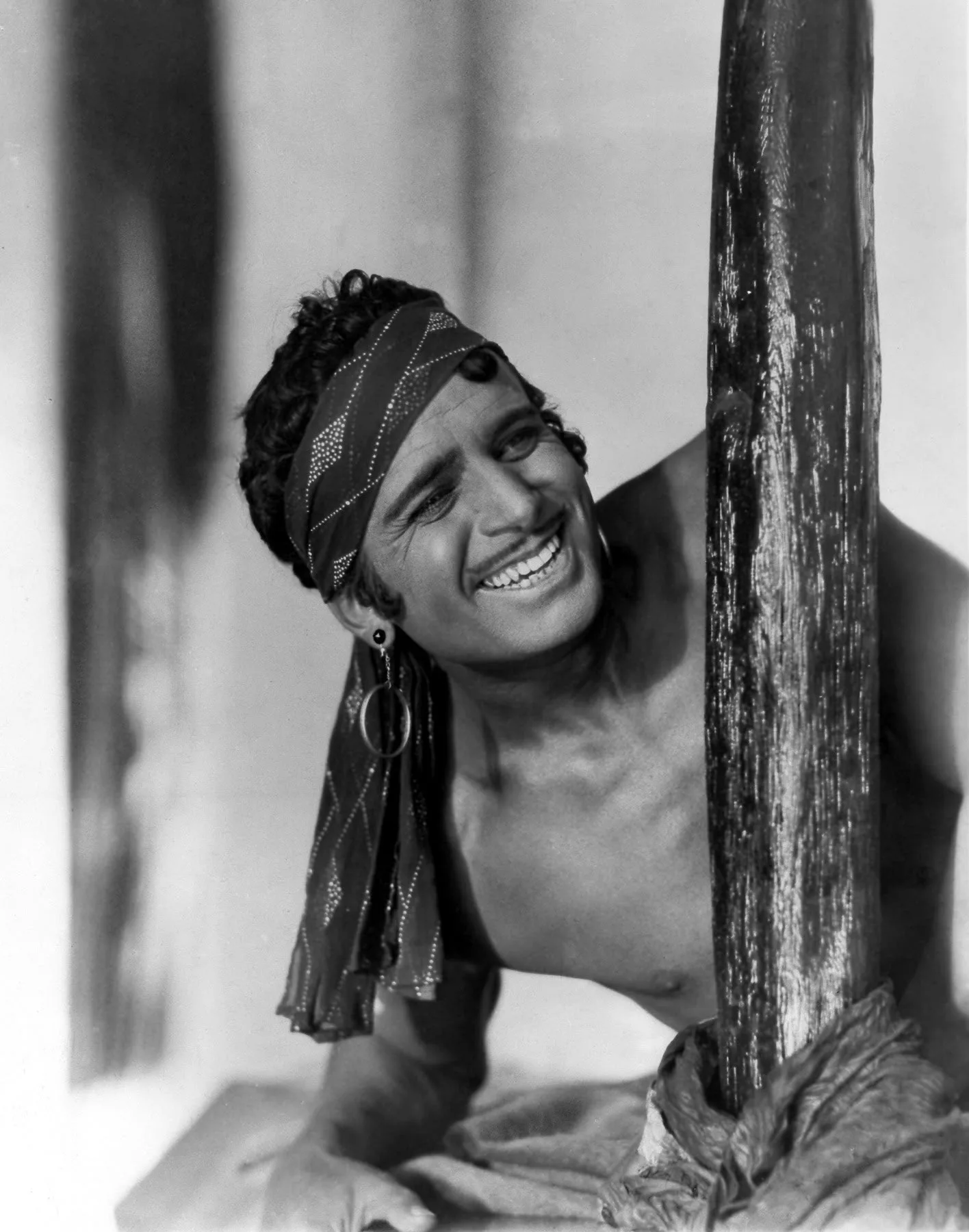
An Epic Fantasy-Action-Spectacle inspired by The Arabian Nights, The Thief Of Bagdad is Douglas Fairbanks’s Silent Film Masterpiece! Experience it with a dynamic live soundtrack performed on our powerful Estey organ! The first film in our MAXIMALIST MYTHOLOGIES SERIES! Appropriate for All-Ages!
The Thief of Bagdad (1924), The first film in our Maximalist Mythologies series! Friday, August 28th, Doors 7pm
Douglas Fairbanks’s masterpiece, The Thief of Bagdad (1924), is an epic fantasy-spectacle inspired by One Thousand and One Arabian Nights. Fairbanks stars as a carefree pickpocket who falls in love with a princess (Julanne Johnston), and can only win her hand by retrieving the rarest treasures on earth, a quest that grows more fantastic with each passing thrill. An indefatiguable Fairbanks battles a fire-breathing dragon in caverns of flame, fights a giant underwater spider, and soars into the clouds on a magic carpet. The superb visual design, spectacle, and special effects, along with his magnetic performance, all contribute to making it his greatest work. that, a century after it was made, continues to amaze audiences and inspire filmmakers.
Our Maximalist Mythologies Series Includes:
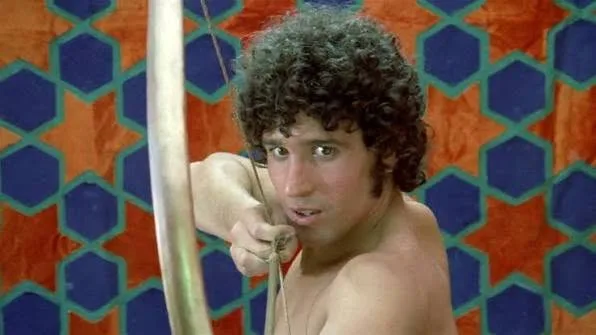
The Thief of Bagdad (1924), The first film in our Maximalist Mythologies series! Friday, August 28th, Doors 7pm Pasolini’s ARABIAN NIGHTS (1974), Sunday, August 30th, Doors 7pm
The Live Pipe Organ Performance:
Jeff Rapsis lives in Bedford, New Hampshire, and accompanies silent film programs in venues throughout New England. A lifelong silent film fan, he began creating original musical scores and staging silent film programs in 2007 as a way to keep the form vibrant before the public. His technique is rooted in a traditional approach and texture, while applying imporovisation using contemporary scoring methods when appropriate to connect with today’s audiences. Outside New England, he has accompanied films at the New York Public Library’s “Meet the Musicmakers” series and the Kansas Silent Film Festival. Rapsis has also provided original music for several silent film DVD releases by Looser Than Loose Vintage Entertainment of Manchester, N.H., and scored the independent feature film Dangerous Crosswinds (2005). His recorded scores also include piano music for Kino Lorber’s reissue of Gloria Swanson’s ‘Zaza’ (1923) and music for Reel Classic DVD’s reissue of ‘The Bells’ (1926) starring Lionel Barrymore and Boris Karloff. As a composer, his ‘Kilimanjaro Suite’ for large orchestra was premiered in 2017 by the N.H. Philharmonic. A journalist by profession, Rapsis is co-founder and associate publisher of HippoPress, a weekly newspaper based in Manchester, N.H. He also serves as executive director of the Aviation Museum of N.H., a non-profit educational center based at Manchester-Boston Regional Airport. Jeff has previously performed live soundtracks on the historic Estey organ at Epsilon Spires for silent films: The Phantom Carriage, The Flying Ace, Wings, The Last Command, Buster Keaton’s THE GENERAL and Our Hospitality, and Clara Bow’s romantic comedy “It”.
CRITICAL ACCLAIM:
“A WONDERFUL EXPERIENCE THE WHOLE FAMILY CAN SHARE! The kind of movie that can win children over to the beauty and uniqueness of silent movies!”- Leonard Maltin
“A DREAM, A COMIC STRIP, A PREDICTION OF FUTURE ENTERTAINMENT TECH… With its picturebook archways and spiraling minarets, its Baghdad’s walls as lightly sunny as lemon cake, Raoul Walsh’s jolly epic still stands as a miracle of production design.” – Alan Scherstuhl,Village Voice
“It is an entrancing picture, wholesome and beautiful, deliberate but compelling, a feat of motion picture art which has never been equaled and one which itself will enthrall persons time and again,” raved Mordaunt Hall in the New York Times. Hall made mention of Gest’s elaborate presentation, the theater outfitted in “a thoroughly oriental atmosphere, with drums, vocal offerings, odiferous incense, perfume from Bagdad, magic carpets, and ushers in Arabian attire, who during intermission made a brave effort to bear cups of Turkish coffee to the women in the audience.”
The New York Herald Tribune proclaimed The Thief of Bagdad “the greatest thing that ever has been put on the screen!” Photoplay magazine rhapsodized: “Here is magic. Here is beauty. Here is the answer to the cynics who give the motion picture no place in the family arts … It is a work of rare genius ….” Robert E. Sherwood, future playwright and Fairbanks collaborator, wrote in Life magazine, “Fairbanks has gone far beyond the mere bounds of possibility; he has performed the superhuman feat of making his magic seem probable.”
Poet Carl Sandburg wrote in the Chicago Daily News, “Probably no one photoplay since the motion picture business and art got going has been greeted so enthusiastically in the circles known as highbrow and lowbrow.” Like many others, Sandburg saw the film more than once; the following year he called it “a masterpiece.” In 1926, the poet and film aesthetician Vachel Lindsay recommended seeing The Thief of Bagdad ten times, as he had; he called it “architecture-in-motion” and “sculpture-in-motion,” two of Lindsay’s own film aesthetic values on ample display in the film. “The history of the movies is now David Wark Griffith, Douglas Fairbanks, and whoever rises hereafter to dispute their title,” Lindsay proclaimed.
Although the reviews were ecstatic, The Thief of Bagdad was not the commercial success that Fairbanks had anticipated. However, it remained Fairbanks’s favorite of all his films. The Museum of Modern Art has kept the film in circulation for more than 70 years and a proliferation of lesser-quality reproductions of the film remain available as its copyright was not renewed. The film has enjoyed various revivals, notably at the Dominion Theatre in London in 1984 and at Radio City Music Hall in New York City in 1987 with a musical score by Carl Davis based on the compositions of Rimsky-Korsakov. This new DCP restoration, completed by the Cohen Film Collection in 2012, ensures that this great and enduring work of world cinema will be seen and enjoyed into the 21st century. Orson Welles, who saw it as a boy, said “I’ll never forget it.”

Join the conversation
Have something to add? Sign in to leave a comment on this event.
Leave a comment